 English
 Español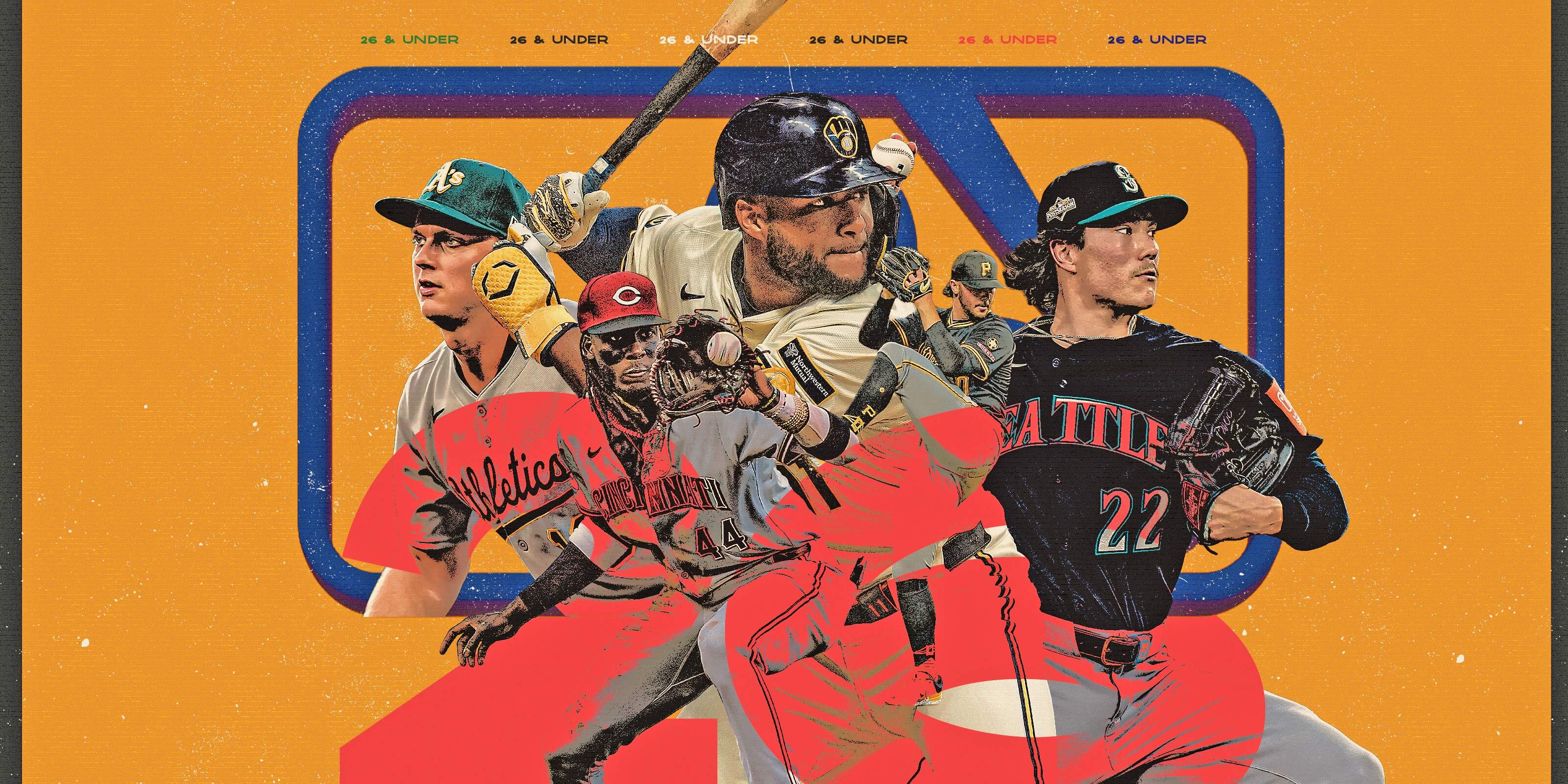
Yahoo Sports’ 26-and-under power rankings are a remix on the traditional farm system rankings that assess the strength of MLB organizations’ talent base among rookie-eligible and MiLB players. By evaluating all players in an organization entering their age-26 seasons or younger, this project aims to paint a more complete picture of each team’s young core. Our rankings value productive young major leaguers more heavily than prospects who have yet to prove it at the highest level, and most prospects included in teams’ evaluations have already reached the upper levels of the minors.
To compile these rankings, each MLB organization was given a score in four categories:
Young MLB hitters: scored 0-10; 26-and-under position players and rookie-eligible hitters projected to be on Opening Day rosters
Young MLB pitchers: scored 0-10; 26-and-under pitchers and rookie-eligible pitchers projected to be on Opening Day rosters
Prospect hitters: scored 0-5; prospect-eligible position players projected to reach MLB in the next 1-2 years
Prospect pitchers: scored 0-5; prospect-eligible pitchers projected to reach MLB in the next 1-2 years
We’re counting down all 30 organizations’ 26-and-under talent bases from weakest to strongest, diving into five teams at a time. In addition to the scores for each team in each category, we’ll highlight the key players who fall into each bucket and contributed most to their organization's place in the rankings. Below, we dig into the top five teams.
Read more: Nos. 30-26 | Nos. 25-21 | Nos. 20-16 | Nos. 15-11 | Nos. 10-6
5. Cincinnati Reds (total score: 18/30) | 2025 rank: 4
Young MLB hitters (7/10): SS Elly De La Cruz, 1B Sal Stewart, 2B Matt McLain, OF Noelvi Marte, 1B Christian Encarnacion-Strand
Young MLB pitchers (8/10): RHP Hunter Greene, RHP Chase Burns, RHP Connor Phillips, RHP Julian Aguiar, RHP Luis Mey
Prospect hitters (2/5): SS Edwin Arroyo, 1B Cam Collier, OF Héctor Rodríguez, C Alfredo Duno
Prospect pitchers (1/5): RHP Rhett Lowder, RHP Chase Petty, RHP Jose Franco, RHP Zach Maxwell
The Reds join the Mariners as the two holdovers from the top five of last year’s rankings, hanging on to a spot in this elite tier despite some uneven progress from their biggest stars and a below-average farm system. That Elly De La Cruz’s season in which he hit 22 home runs, stole 37 bases and played in all 162 games was considered something of a disappointment speaks to how much hype surrounded him.
It was revealed after the season that De La Cruz was playing through a left quad strain from July on, making his games played total all the more incredible and helping explain why his performance fell off down the stretch. He hit .221/.280/.341 over the final 52 games, with just three homers and eight stolen bases. There’s no reason a healthy De La Cruz can’t get back on track to becoming the perennial MVP candidate we all projected him to be, but there are weaknesses in his game that still need addressing, namely his ability to hit right-handed and his overall plate discipline. Still, few players possess Elly’s ceiling, and that fact alone ensured that Cincinnati scored well in the young MLB hitters category.
Last year was also a strange season for the Reds’ brightest pitching talent, Hunter Greene. The good: Greene paired a 31.4% strikeout rate (the fifth-highest rate in MLB, min. 100 innings) with by far the lowest walk rate of his career (6.2%) and posted career-best marks in WHIP (0.938) and FIP (3.27). The bad: A groin injury necessitated two stints on the IL that limited him to 19 regular-season starts, and Greene got blasted by the Dodgers (5 ER in 3 IP, 3 HR allowed) in the wild-card round in his postseason debut. As with De La Cruz, Greene’s otherworldly pure talent often leaves us wanting more, but that doesn’t mean he isn’t immensely valuable at present.
This era of Reds baseball might always be defined by the triumphs and failings of De La Cruz and Greene, but a few other main characters have started to emerge. Last year brought the encouraging debuts of Chase Burns on the mound and Sal Stewart in the batter’s box. Burns’ high-powered arsenal garnered a ton of whiffs in his initial taste of the majors, and his upside is that of a legitimate co-ace alongside Greene. Stewart rakes, plain and simple, and should raise the floor and ceiling of the Reds’ lineup right away; he’s not shy about his goals for 2026, either. Noelvi Marte’s transition to right field helped balance out the depth chart, but he needs to prove he can actually hit if he’s going to remain a key cog. Then there’s Matt McLain, perhaps the biggest enigma of the bunch. A standout rookie in 2023, McLain missed the entire 2024 season due to shoulder surgery. In his highly anticipated return in 2025, he provided strong defense at second base, plus some power (15 HR) and speed (18 SB), but his overall offensive output was downright poor. His 77 wRC+ was fifth-lowest among qualified hitters.
Once Stewart graduates, this farm system will be comfortably below-average, particularly at the upper levels. Rhett Lowder’s advanced pitchability helped himzoom to the majors, but the 2023 seventh overall pick barely pitched in 2025 due to injury. Chase Petty continues to throw quite hard but got pummeled by both Triple-A and big-league bats last season. Cam Collier, Edwin Arroyo and Héctor Rodríguez could surface as useful role players by 2027, but the most well-regarded talents in this system are much further away — high-variance teenagers such as catcher Alfredo Duno and recent early draft picks such as Steele Hall and Tyson Lewis. These are exciting prospects, but not the genre of players who earn high marks in these rankings. — J.S.
4. Athletics (total score: 18/30) | 2025 rank: 18
Young MLB hitters (10/10): 1B Nick Kurtz, SS Jacob Wilson, OF Tyler Soderstrom, OF Lawrence Butler, OF Denzel Clarke, 3B Max Muncy, OF Colby Thomas, INF Zack Gelof, INF Darell Hernaiz
Young MLB pitchers (2/10): RHP Luis Morales, RHP Jack Perkins, RHP Joey Estes
Prospect hitters (3/5): SS Leo De Vries, 3B Tommy White, SS Joshua Kuroda-Grauer, OF Junior Perez, OF Henry Bolte
Prospect pitchers (3/5): LHP Jamie Arnold, LHP Gage Jump, RHP Kade Morris, RHP Braden Nett, RHP Henry Baez, RHP Gunnar Hoglund, RHP Eduarniel Núñez, RHP Mason Barnett, LHP Wei-En Lin
No team made a bigger jump from last year than the A’s, who vault into the top five of these rankings thanks in large part to a spectacular collection of young hitters surfacing simultaneously. The team’s leap up the list is even more remarkable considering that the A’s ranked 28th and 29th in the first two editions of our rankings, which speaks to the rapid progress made not only in the majors but also on the farm, which has been strengthened via trades and some solid drafting. While the franchise as a whole is still in flux as it bides its time in West Sacramento waiting for a new ballpark in Las Vegas, the sudden increase in talent on the field can be viewed only as a positive for the A’s.
With the top two finishers in last year’s AL Rookie of the Year race, Nick Kurtz and Jacob Wilson, plus another potent left-handed slugger in Tyler Soderstrom, the A’s join the D-backs and Royals as the only three clubs that earned the maximum score in the young MLB hitters category. Kurtz’s immediate impact as a game-wrecking force in the batter’s box was breathtaking to witness and all the more astonishing considering he was just a year removed from college. There might always be a lot of whiffs in his game, but few hitters league-wide project to do extra-base damage as frequently as Kurtz for the foreseeable future.
Wilson, meanwhile, put together a terrific rookie campaign with a polar opposite profile: sublime bat-to-ball skills paired with competent defense at a premium position. Soderstrom’s 125 wRC+ last season ranked seventh among hitters eligible for this year’s rankings, and the former catcher also displayed shocking aptitude with the glove in left field. Another encouraging development last season was the arrival of Denzel Clarke, who might be the best defensive center fielder on the planet and has the physical tools to make an occasional difference with the bat as well, though any offensive output would be just gravy.
The stunning deadline swap that sent fireballing closer Mason Miller to San Diego will hurt in the short term, but it was an understandable move for the A’s to make, considering the headliner in the return: switch-hitting shortstop Leo De Vries, a gifted all-around player who reached Double-A at age-18 after the trade. De Vries is one of the best prospects we’ve seen traded by any team in recent memory. Even if he doesn’t factor into the A’s infield until 2027, that would be just his age-20 season, which speaks to his rare talent and a trajectory that could make him the next building block in an A’s lineup that already has several. There are other solid hitters to monitor in the upper levels, though they will need to earn an extended look in the majors, based on the caliber of talent beginning to coalesce ahead of them on the depth chart.
It’s not all rosy, of course. Lawrence Butler’s bat took a big step back following his breakout 2024 due to a ballooning strikeout rate and severe struggles against left-handers. Former first-round draft pick Max Muncy did not hit or defend well as a rookie, leaving third base as the one position on the diamond that remains unsettled for the A’s. Zack Gelof has slid backward in consecutive years since his loud performance as a rookie. But because of all the ascendent hitters elsewhere in the lineup, the A’s can afford some developmental derailments for a few bats.
The more pressing need is identifying which young arms can contribute in the here and now. It’s a shallow bunch as things stand, but Luis Morales is the name to know. Inconsistent strike-throwing has threatened Morales’ chances of sticking as a starter since he signed for $3 million out of Cuba three years ago, but the stuff has never been in question, and the A’s are going to give him every chance to earn a spot in the rotation in 2026.
There’s more promise on the mound in the minors. Trades have netted a nice variety of right-handers (Gunnar Hoglund, Mason Barnett, Kade Morris, Henry Baez, Eduardiel Núñez, Braden Nett), though it remains to be seen who will stick as starters and who will be ticketed for relief. But the most exciting element of this system, beyond De Vries, is the trio of homegrown left-handers: 22-year-old Gage Jump, 21-year-old Jamie Arnold and 20-year-old Wei-En Lin. Jump (second-round pick in 2024) pitched his way to Double-A in his first full pro season and could debut this summer. Arnold, a candidate to go first overall entering his junior spring, surprisingly fell to pick No. 11 in July, where the A’s happily scooped him up. Lin signed for $1.13 million out of Taiwan and piled up a boatload of punchouts against A-ball bats — 109 across 80 1/3 innings, to be exact. Lin is pitching for Chinese Taipei in the World Baseball Classic, which should be appointment viewing. All together, there’s optimism that the A’s can develop enough arms to effectively support their standout offense, but the team’s return to contention will depend on how quickly that happens. — J.S.
3. Pittsburgh Pirates (total score: 18/30) | 2025 rank: 8
Young MLB hitters (1/10): C Henry Davis, INF Nick Yorke, OF Jhostynxon Garcia, C Endy Rodríguez
Young MLB pitchers (10/10): RHP Paul Skenes, RHP Braxton Ashcraft, RHP Bubba Chandler, RHP Jared Jones, LHP Mason Montgomery
Prospect hitters (5/5): SS Konnor Griffin, INF Termarr Johnson, C/1B Rafael Flores Jr., OF Esmerlyn Valdez, 1B/OF Edward Florentino
Prospect pitchers (2/5): LHP Hunter Barco, RHP Thomas Harrington, RHP Wilber Dotel, RHP Antwone Kelly, RHP Brandan Bidois
Paul Skenes and Konnor Griffin. Konnor Griffin and Paul Skenes. No other team in baseball has both a pitcher and a hitter of such renown. Skenes is, at worst, the second-best hurler in the world. Griffin is, by unanimous decision, the best prospect in the sport. For all their frustrating frugality, poor planning and years of underperformance at the big-league level, the Pirates are uniquely situated to finally, finally take that step forward.
Let’s start with Skenes, the reigning NL Cy Young. By ERA (1.96), the towering 23-year-old has put together the single best 55-game start to a career in MLB history. Pitchers are volatile, susceptible to debilitating injury at any time, but with contract status taken into account, Skenes is — by a million lightyears — the most valuable hurler in the sport right now. Questions about his future have already arisen, as he enters Year 3 with the Pirates, and those questions will only grow in volume.
Griffin, though decidedly less proven, could end up being even more impactful. Drafted ninth overall in 2024, the Mississippian entered pro ball with a cathedral ceiling and significant hit tool concerns. The athleticism and skill set were off the charts, and there was no doubt about Griffin’s power potential, but talent evaluators across the game worried about whether he could correct a dangerous hitch in his swing.
That fix happened almost immediately, with Griffin obliterating three minor-league levels with a combined .941 OPS in 122 games as a 19-year-old. It was a historic, eye-opening performance, one that rocketed him up to No. 1 on everybody’s prospect rankings. That Griffin, considered a likely outfielder coming out of high school, simultaneously solidified himself as a plus shortstop makes his 2025 all the more impressive.
Better prospects than Griffin have fallen short of expectations, but this is a monster, monster talent — the type of player who can redirect the fortunes of a franchise. Whether Griffin makes the 2026 team out of spring training is not really that important. Pittsburgh should be jumping for joy that his big-league window is going to match up with Skenes’, something that didn’t seem possible when Griffin was drafted less than two years ago.
Get used to this. Konnor Griffin is a superstar. pic.twitter.com/eZM2S3EM7f
— Jeff Passan (@JeffPassan) February 24, 2026
Two superstars, on their own, cannot win a World Series. That reality makes Pittsburgh’s complementary young pieces all the more crucial. BraxtonAshcraft, Jared Jones and BubbaChandler would give the Pirates one of the higher pitching grades on our list even without Skenes. If that entire trio doesn’t actualize — Ashcraft is more of a back-end type, Jones struggles after returning from Tommy John, or Chandler moves to the bullpen — the odds of Pittsburgh getting some level of impact there remains high.
Things are a bit hazier on the offensive front behind Griffin. HenryDavis looks like a capable, glove-first catcher who might not hit enough to play every day. NickYorke might be a second-division regular. JhostynxonGarcia, acquired over the winter from Boston in the Johan Oviedo deal, is a wonderful athlete who should stick in center but has hit tool questions. TermarrJohnson was the fourth overall pick in 2022 but hasn’t maintained the elite bat-to-ball skills he showed as an amateur. He also might not be able to handle left-handed pitching. RafaelFlores, who came over as the headliner for David Bednar last deadline, should arrive in 2026 as a capable every-day backstop. EsmerlynValdez has outrageous juice but tons of chase and no defensive value.
If this sounds like a top-heavy group, yes. Pittsburgh will likely need to make external position-player additions to supplement this young core. That’s not the worst place to be. But the stakes in Pittsburgh are most certainly raised now. Skenes and Griffin give the Pirates a generational opportunity. Here’s hoping they make the best of it. — J.M.
2. Seattle Mariners (total score: 21/30) | 2025 rank: 3
Young MLB hitters (7/10): OF Julio Rodríguez, 2B Cole Young, 2B Ryan Bliss
Young MLB pitchers (7/10): RHP Bryan Woo, LHP Jose A. Ferrer, RHP Carlos Vargas, RHP Logan Evans, RHP Troy Taylor
Prospect hitters (4/5): SS Colt Emerson, INF/OF Michael Arroyo, OF Lazaro Montes, OF Jonny Farmelo, INF Brock Rodden
Prospect pitchers (3/5): LHP Kade Anderson, RHP Ryan Sloan, RHP Michael Morales, RHP Teddy McGraw, LHP Robinson Ortiz, RHP Alex Hoppe
The Mariners are the only team with at least one clear-cut star or future star in all four categories of evaluation. A franchise anchor atop the lineup and in the field in Julio Rodríguez, who has finished in the top seven in AL MVP voting in three of his first four major-league seasons. An All-Star starting pitcher in Bryan Woo, fresh off a breakout campaign that featured a franchise-record 25 consecutive starts of at least six innings and a fifth-place finish in AL Cy Young voting. A consensus top-10 prospect in baseball in Colt Emerson, a sweet-swinging infielder pushing to make his MLB debut at age 20. And two of the most promising pitchers in the minor leagues in lefty Kade Anderson, the third pick in last year’s draft, and right-hander Ryan Sloan, who has all the makings of a future frontline arm. All together, this breadth of upper-echelon talent is enough to push Seattle nearly to the very top of our rankings, despite lacking the overall depth featured in some other organizations.
No matter how you slice it, Rodríguez is off to one of the great starts to a career we’ve ever seen from a center fielder, surpassing 100 home runs and 100 stolen bases before turning 25 while playing sensational defense at an up-the-middle position. The bizarre trend of him struggling badly at the plate in the early months before transforming into a sizzling superstar in the second half continued in 2025, but his impact with the glove and on the bases ensures a floor as one of the most valuable players in the sport, regardless of how hot and cold his bat can be. Should he ever put together a complete campaign at the plate, a 40-40 season is practically inevitable, which in tandem with his defense would make him a legitimate threat to win MVP. His on-field impact is also unquestionable, and what he does off the field shouldn’t go overlooked, either.
Woo is the latest Mariners arm to make his case as one of the league’s best. With pinpoint command of a balanced arsenal headlined by a special fastball, the 26-year-old right-hander barely had any hiccups all regular season — until a pectoral injury in September limited his postseason availability to a pair of relief outings. It was an unfortunate capper to an otherwise successful year, but Woo still has an argument as the best 26-and-under pitcher in baseball not named Paul Skenes — that’s a heck of a hurler to have under team control for another four seasons. The Mariners’ young MLB pitchers group also got a boost this offseason with the acquisition of Jose A. Ferrer, one of the hardest-throwing lefty relievers around and one Seattle will foster in its renowned pitching development infrastructure.
Woo is part of a rotation that, if healthy, features to be as locked-in of a quintet as any across the league. But “if healthy” proved to be a challenge at times last year, and if any of Woo, Logan Gilbert, George Kirby, Luis Castillo or Bryce Miller falters physically, it’s not impossible to envision Anderson or Sloan representing Seattle’s best backup options by the end of 2026. There’s zero need to rush either arm — Anderson has yet to throw a professional pitch, and Sloan is just 20 years old — but the talent speaks for itself, and if both are dominating Double-A (or higher) later this summer, a call-up could be in order.
Having already made his debut, Cole Young has a headstart on Emerson in terms of making the Opening Day roster, but both project to be fixtures in the Mariners’ infield for years to come. Young had an extended stretch of success in July and August last season before tailing off hard in September and fading off the roster for October The organization is confident he can become an above-average regular at second base with more reps, but with versatile veteran Brendan Donovan in the fold, the Mariners have the flexibility to be patient with Young and Emerson. And while Emerson is by far the likeliest Mariners hitting prospect to impact the major-league team in 2026, there are more big bats not far behind — Michael Arroyo’s minor-league record of mashing is sterling, and Lazaro Montes has humongous raw power and fan favorite upside if he can cut down on the strikeouts. — J.S.
1. Milwaukee Brewers (total score: 22/30) | 2025 rank: 6
Young MLB hitters (7/10): OF Jackson Chourio, 2B Brice Turang, OF Sal Frelick
Young MLB pitchers (8/10): RHP Jacob Misiorowski, RHP Quinn Priester, RHP Logan Henderson, RHP Abner Uribe, LHP Angel Zerpa, LHP Robert Gasser, LHP Kyle Harrison
Prospect hitters (4/5): SS Jesús Made, SS Jett Williams, C Jeferson Quero, SS Cooper Pratt, 3B Brock Wilken, 1B Blake Burke, OF Luis Lara, 3B Andrew Fischer, C Marco Dinges, OF Josh Adamczewski
Prospect pitchers (3/5): RHP Brandon Sproat, RHP Craig Yoho, RHP Coleman Crow, RHP Carlos Rodriguez, RHP Tyson Hardin, RHP Bishop Letson
“How do the Brewers keep doing this?!” we all shout, into the void, every September, when a team of who-is-he’s finishes with 95 games and the NL Central crown.
This is how. JacksonChourio, still 21 years old for another few weeks, has yet to go full supersonic in the majors. His first two seasons, though, have been quite tantalizing. A .781 OPS with 42 homers and 43 steals in 279 games is incredible production from a player that young. Talent evaluators both inside and outside the Brewers org remain bullish on Chourio as a future perennial All-Star. If everything goes right, he’ll soon become the face of this franchise, if he isn’t already.
Sal Frelick and BriceTurang might not have that kind of ceiling, but both are immensely valuable every-day players. We’re not completely buying Turang’s power outburst from 2025, but his glove is so good that he could shave off 100 points of OPS and still be a 3.0-WAR player. There isn’t a better defensive second baseman in the sport. Frelick is a sum-of-the-parts throwback, a pesky, contact-oriented corner outfielder with great defense. Not many teams on this list had three above-average, every-day position players under the age of 26 in 2025.
And there’s more coming — a lot more. JesúsMade is a consensus top-four prospect in the game, a unicorn infielder with bat-to-ball skills, power projection, outrageous rotational athleticism and a deep defensive toolkit. If he isn’t the top prospect in baseball at this time next year, something went seriously sideways. Made, like Konnor Griffin, blitzed through three levels of minor-league ball. A year younger and somewhat less polished, Made likely won’t hit the bigs until next year.
The rest of the Brewers’ minor-league position-player group is good, too. JettWilliams, acquiredin the Freddy Peralta deal, should contribute this season at multiple positions. There aren’t many hitters this short, but Williams has good juice for somebody his size. JefersonQuero has missed a lot of time due to injuries, which definitely dampened his ceiling, but he remains a likely solid regular behind the plate. BlakeBurke is built like an SUV, with the power to match. He might hit enough to be a first-base-only brawler. LuisLara is an elite center field defender who should provide enough offensively to bat ninth.
On the mound, Jacob Misiorowski was a breakout star of 2025, even if his numbers backslid slightly after his surprise All-Star Game appearance. The skinny-limbed stringbean is still overflowing with talent and will begin this season in Milwaukee’s rotation. Let’s see how he handles the workload over a full 162 before we go buckwild. A rotation of Miz, Quinn Priester, Logan Henderson, Robert Gasser and BrandonSproat would be pretty dang good on its own, without the help of any over-26 types. Milwaukee also has its typical gaggle of young relief arms, something that shouldn’t go overlooked. AngelZerpa, Abner Uribe and CraigYoho should all be key cogs in the 2026 ‘pen.
Simply put, Milwaukee’s assortment of young talent, in the big leagues and on the farm, is the envy of baseball. It is an organization built on balance. The Brewers have an enviable combo of high-end talent and depth, pitchers and hitters, high ceiling and high floor. Whether Milwaukee’s ownership group will ever spend enough to push the big-league group over the hump is another question entirely. But this front office has done an absolutely stellar job at acquiring, developing and promoting young talent. On that front, Milwaukee is the best in the game. — J.M.